Jesus Christ Monogram SVG
A Designer’s First Glance: Reverent, Clean, and Purposefully Minimal
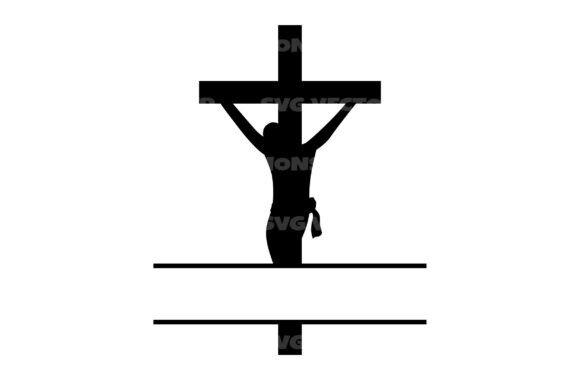
When I opened Jesus Christ Monogram SVG for the first time, my eye went straight to balance—not just symmetry, but spiritual weight. It’s not ornate or baroque; it’s a quiet fusion of sacred initials (IHS or Chi-Rho stylings, depending on interpretation) wrapped in subtle curvature and gentle line weight. There’s no excessive scrollwork, no fragile flourishes that would vanish under satin stitch. Instead, it breathes like a hand-drawn monogram—confident, centered, and instantly legible at 3–4 inches tall. That tells me this isn’t just another decorative file—it’s built for real-world reverence, not just visual noise.
Where It Lives Best: Tote Bags, Nursery Pillows, and Thoughtful Gifts
Last week, I used Jesus Christ Monogram SVG to embroider a linen tea towel for a friend’s baby shower—a soft, cream-colored towel with pale gray thread. The result? Calm, elevated, deeply personal. No kitsch, no clutter. Just warmth and intention. That’s the sweet spot: products where meaning matters more than flash. Think embroidered cotton aprons for church volunteers, lightweight sweatshirts for youth group retreats, or pillow covers for nursery decor. It also works beautifully as an embroidered patch—clean enough for iron-on backing, refined enough for sewn-on heirloom quality. As an Etsy seller, I’d list it alongside “faith-based handmade product” bundles—not as standalone clipart, but as part of a curated collection: a monogram + matching cross motif + simple scripture border, all sharing the same restrained aesthetic.
What Holds Up Under the Needle—and What Needs Caution
Stitching Jesus Christ Monogram SVG on a midweight cotton tote? Smooth. On a brushed fleece sweatshirt? Still clean—thanks to moderate stitch density and open negative space. But I’ll be honest: on thin rayon-blend baby onesies or tightly curved cap fronts, I’d scale it down to 2.5 inches max and add lightweight tear-away stabilizer underneath. Why? Because even modest curves tighten when hooped, and fine interior lines can blur if the fabric shifts. Also, avoid dense fill-stitch interpretations in the center motif unless you’re using high-quality 40-weight thread and testing tension first—some versions of this design lean into satin stitch borders, and those demand precise hoop tension and steady feed dogs.
Dark fabrics call for extra attention too. I tested it on navy twill with ecru thread—lovely contrast—but switched to metallic gold on black for a boutique holiday gift. That worked only because the outline stayed crisp and uncluttered. If your version includes tiny inner detailing (like micro-crosses or dot accents), skip dark backgrounds unless you’re confident in your machine’s fine-detail capability.
How It Shapes Perception—Before and After Stitching
This isn’t just about legibility—it’s about resonance. A customer buying a personalized embroidered gift doesn’t want “crafty.” They want sincerity. Jesus Christ Monogram SVG delivers that through restraint: no cartoonish elements, no dated fonts, no forced whimsy. That builds trust. When I showed the finished tea towel to my client, she paused—then said, “It feels like it was made *for* us.” That’s the power of intentional design. It elevates the handmade product from “nice” to “meaningful,” and that distinction directly impacts perceived value, repeat orders, and word-of-mouth referrals in faith-based craft communities.
For small shop owners and apparel decorators, consistency matters. This monogram holds up across mediums: as a single-color embroidery file on a canvas tote, as a two-tone applique design on a denim jacket, or scaled down for a printed mockup on an Etsy listing. Its clarity means your digital embroidery file previews look trustworthy—even in grayscale. And because it avoids trendy embellishments, it won’t feel outdated next season. That’s rare in religious-themed design assets.
Practical Notes Every Embroiderer Should Run Through
- Always test first—especially on your target fabric. A scrap run reveals how corners hold, whether inner loops pull tight, and how thread color interacts with texture.
- Check stitch density before hooping delicate items. If the file packs heavy fill stitches into narrow zones, consider lightening density manually—or choose a lighter version if offered.
- Confirm hoop size compatibility. Most versions fit comfortably in a 4x4 hoop at standard sizing—but verify before committing to a large batch.
- Inspect small details at 200% zoom in your embroidery software. Are connecting strokes intentional? Do any anchor points look fragile?
- Mock it up in black and white first—no color distraction—to assess contrast and silhouette strength.
- Match stabilizer to fabric: cutaway for knits, tear-away for stable wovens, mesh for lightweight linens.
- Review licensing before selling finished items or bundling digitally. If commercial use isn’t explicitly granted, don’t assume it’s allowed—even for Crafts-category listings.
Final Thought: It’s Not Just a Design—It’s a Quiet Invitation
I’ve stitched dozens of monograms—from playful script to bold block letters—but Jesus Christ Monogram SVG stands apart because it refuses to shout. It doesn’t need glitter, shadow effects, or layered fonts to carry weight. That makes it unusually versatile: equally at home on a baptismal blanket, a pastor’s pocket square, or a small shop’s branded gift bag. For embroidery designers and creative entrepreneurs, that kind of quiet confidence is gold. It saves time in editing, reduces customer revisions, and lets the meaning—not the machine—take center stage. Use it thoughtfully, test it honestly, and let the simplicity do the speaking.