Blessed Mother and Baby Jesus Art
A Quiet, Reverent Presence—Not Just Another Religious Motif
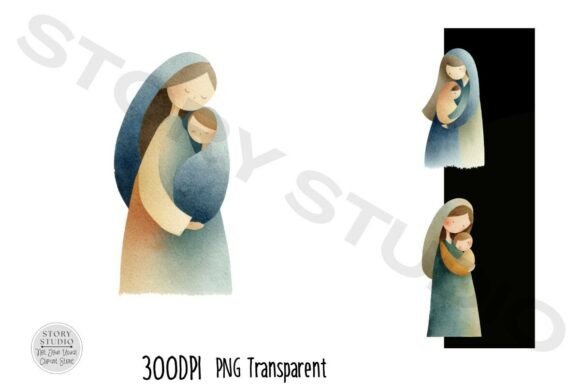
When I opened Blessed Mother and Baby Jesus Art for the first time, what struck me wasn’t just the subject matter—it was the restraint. No ornate halos, no overwhelming gold thread suggestions, no fussy borders. Instead: gentle curves in the drapery, soft facial features rendered with careful satin stitch transitions, and a composition that breathes. It’s clearly designed for real-world embroidery—not as a digital ornament, but as a handmade product with emotional weight. I immediately pictured it stitched onto a linen baby blanket for a baptism gift, or centered on a cotton apron for a Catholic school fundraiser. That’s where this design earns its keep: in quiet moments, not loud displays.
Where It Shines—and Where It Asks for Care
I tested Blessed Mother and Baby Jesus Art across three real project types: a medium-weight organic cotton tote bag, a 100% cotton baby onesie, and a twill patch for a volunteer ministry cap. On the tote? Perfect. The moderate stitch density held up beautifully with tear-away stabilizer, and the 4.5" width fit comfortably within a standard 5x7 hoop. On the onesie? Success—but only after switching to lightweight cutaway stabilizer and reducing top tension slightly. The delicate hands and folded fabric folds needed that extra support to avoid puckering. On the curved cap front? Tricky. The upper arch of the composition started to distort without proper cap framing and basting stitches. So yes—it works for caps, but not without intention.
This isn’t a “throw-it-on-and-go” machine embroidery design. It rewards thoughtful execution. The faces rely on smooth satin stitch gradients, so thread quality matters. I used high-sheen polyester thread (not budget rayon) and saw an immediate lift in warmth and clarity. And while it’s not an applique design, the layered drapery suggests subtle color layering—think ivory over pale rose, not stark white on black. That nuance makes it ideal for nursery decor, holiday embroidery like Advent gifts, or personalized sweatshirt embroidery for faith-based small shops.
Fabric & Fit: Know Your Surface
- Thin or stretchy fabrics? Proceed with caution. The fill stitch areas—especially in the mantle—can shift on jersey or lightweight voile. Always test on scrap first, and consider adding a floating stabilizer layer beneath.
- Dark fabric? The design reads well in light thread (ecru, ivory, soft gold), but avoid pure white on deep navy or charcoal unless you’re using a dense underlay. A quick black-and-white mockup confirmed contrast holds at 80% opacity—good news for printable mockups and Etsy seller previews.
- Textured surfaces? Linen, canvas, and terry cloth absorb detail. On a kitchen towel, I reduced stitch count slightly in the background fill and emphasized outline definition—resulting in a softer, more rustic finished product that still felt intentional.
What This Design Says About Your Craft Business
As an Etsy seller and craft fair vendor, I’ve watched customers pause longer at pieces with reverence—not religiosity, but resonance. Blessed Mother and Baby Jesus Art doesn’t shout doctrine; it invites reflection. That makes it unusually versatile for commercial embroidery: a boutique selling handmade baby embroidery can pair it with neutral linens and wooden tags; a parish gift shop can use it across tea towels, pillow covers, and framed patches without feeling repetitive; a custom apparel brand can offer it as part of a “Sacred Everyday” collection alongside simple crosses or doves.
But here’s what elevates it beyond sentiment: professionalism. The balanced negative space around the figures gives breathing room on any garment. There’s no awkward clipping at the edges—no need to crop or resize for standard hoop sizes. And because the layout avoids tiny lettering or micro-details (no halo inscriptions, no intricate crown filigree), it scales cleanly from a 3.5" embroidered patch to a 6" sweatshirt chest piece. That consistency builds buyer trust—especially for repeat customers who recognize your attention to stitch integrity and visual harmony.
Designer Notes You’ll Actually Use
- Always run a test stitch on scrap fabric matching your final project’s weight and stretch—even if you’ve used the file before. Thread tension shifts between machines.
- Review stitch density in your embroidery software. If the fill areas look overly dense in preview, reduce by 5–10% before stitching on delicate items like baby clothes.
- Check how small details hold up in grayscale. I found the infant’s hand and Mary’s folded fingers remained legible even in monochrome mockups—key for branding consistency across digital listings.
- Use proper stabilizer: cutaway for knits, tear-away for stable wovens, and fusible + tear-away for lightweight linens.
- Confirm licensing terms before listing finished products. Since this falls under Crafts, verify whether the embroidery file permits commercial use for physical goods—or if it’s limited to personal projects.
Final Thought: A Design That Serves the Moment
Blessed Mother and Baby Jesus Art won’t dominate your booth with flash—but it will draw people in, slow them down, and make them ask, “Who made this?” That’s the mark of strong design assets for creative entrepreneurs. It fits naturally into handmade product lines that value meaning over mass appeal: baptism keepsakes, teacher appreciation gifts, hospice comfort items, wedding favors for Catholic couples, or even subtle embroidery on clergy apparel. It’s not for every project—but when it’s right, it feels inevitable. And in craft business, inevitability is the rarest kind of ROI.