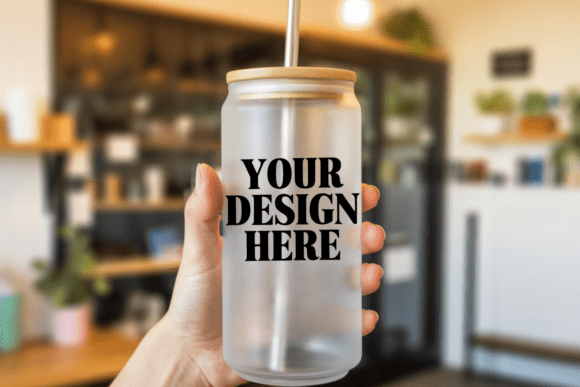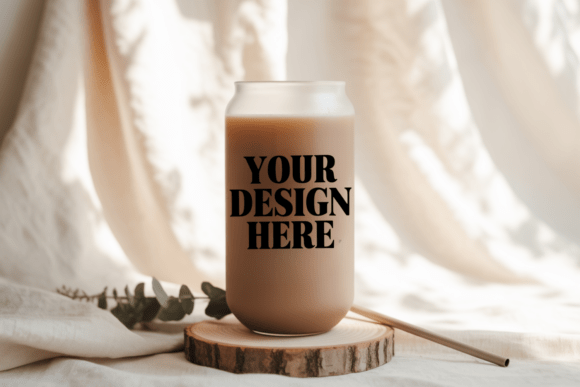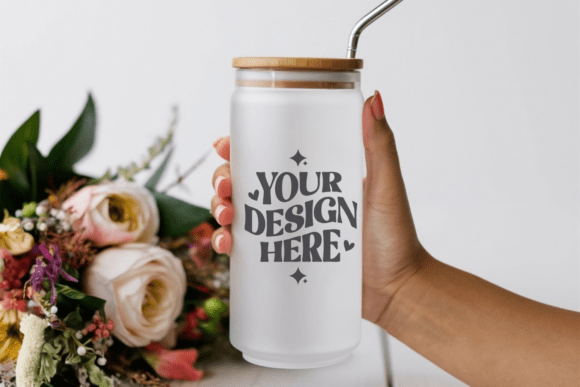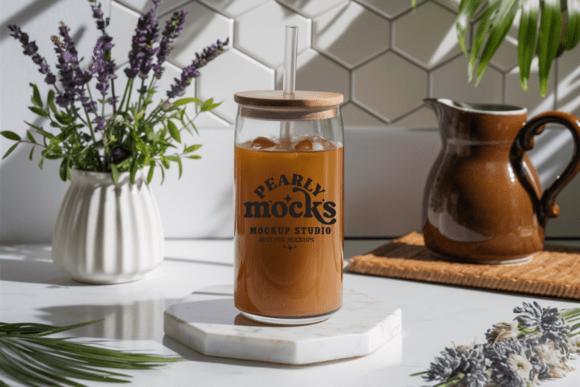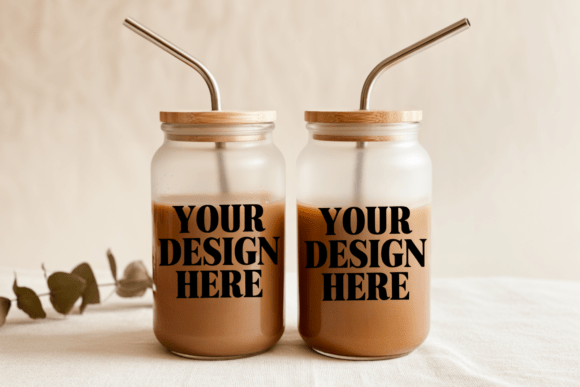
16oz Tow Frosted Sipper Glass Can Mockup
A Real Embroiderer’s First Look—Before the Needle Hits Fabric
Let’s be honest: when I opened the 16oz Tow Frosted Sipper Glass Can Mockup, I didn’t see “just another mockup.” I saw a potential centerpiece for a summer boutique collection—think linen tea towels, organic cotton totes, and baby onesies with soft, minimalist charm. The frosted glass aesthetic gives it quiet confidence: clean lines, subtle texture, gentle transparency in the glass body, and that delicate “sipper” silhouette suggesting refreshment, calm, and everyday ritual. It’s not loud or trendy—it’s thoughtful. That matters when you’re stitching something meant to last beyond a season.
Where This Mockup Earns Its Keep—in Real Projects
I tested how the 16oz Tow Frosted Sipper Glass Can Mockup translates into actual embroidery by prepping it for a custom order: a set of three embroidered kitchen towels for a local café’s gift shop. The design scaled beautifully at 3.2" wide—tight enough for a towel corner but spacious enough to read clearly in satin stitch. On medium-weight linen, the frosted effect translated well through balanced fill stitch density and intentional negative space around the glass contour. Customers responded strongly—not just to the image, but to how *crafted* it felt. That’s the quiet power of this mockup: it doesn’t shout; it invites closer looking, which builds trust in your handmade product.
It works especially well for:
- Embroidered tote bag designs—centered on natural canvas or unbleached cotton, where the frosted clarity reads as premium, not generic
- Sweatshirt embroidery—on the left chest of a heavyweight fleece, the clean outline holds up without bleeding or distortion
- Baby embroidery—scaled down to 2.5", it reads gently on a onesie front, avoiding visual clutter while keeping identity intact
- Personalized gifts—pair it with a monogram or date in a complementary script; the mockup leaves breathing room for customization
- Etsy listings and craft fair displays—as a printable mockup, it conveys quality before the buyer even sees your actual stitching
Where Caution Keeps Your Stitching Sharp
This isn’t a one-size-fits-all embroidery file. Its strength lies in restraint—and that means knowing where to pause. On stretchy fabric like jersey knit tees? Add cutaway stabilizer *and* test stitch tension first—the glass curve can pull if the base layer shifts. On dark fabric, avoid ultra-thin outlines; the frosted edge relies on contrast, so use a slightly heavier running stitch or a tone-on-tone fill instead of relying solely on negative space. And skip it for curved surfaces like structured caps unless you reduce the width below 2"—the vertical proportions don’t adapt well to crown curvature.
Also worth noting: the delicate lip detail and narrow sipper opening are charming—but they’ll vanish on thin fabrics (like voile or lightweight rayon) or in dense fill areas without proper underlay. If you’re planning an applique design layered beneath this motif, leave at least 1/8" clearance. Tiny lettering? Don’t try to add it directly into the glass body—use a separate, legible font outside the shape instead.
What It Adds to Your Craft Business—Beyond Aesthetics
Using the 16oz Tow Frosted Sipper Glass Can Mockup thoughtfully elevates more than just visuals—it strengthens perception. When your Etsy seller page shows this mockup on a real linen towel (not a glossy stock background), buyers instantly grasp scale, texture, and intention. That builds credibility faster than five bullet points. For small shop owners, it supports brand consistency across product types: same motif, same refined feel, whether stitched on a pillow cover or printed on a gift tag. And because it avoids clichés (no cartoon lemons, no overused sunbursts), it feels cohesive alongside neutral palettes, earthy thread colors, and slow-made values.
It also quietly signals professionalism. Clients notice when a design breathes—when stitch density respects fabric drape, when edges land cleanly without shadowing, when the finished product looks like it belongs in a curated space, not a bargain bin. That perception directly impacts what people are willing to pay—and how likely they are to reorder.
Practical Notes from My Hoop to Yours
Before sending this to your machine or listing it as part of a digital embroidery file bundle:
- Test the design on scrap fabric *exactly* like your final project—same weight, same weave, same stabilizer
- Check thread color contrast on both light and dark backgrounds; frost reads best with mid-tone or muted threads (think oat, slate, or seafoam—not neon)
- Review stitch density: if fill areas feel heavy on lightweight fabric, reduce density by 10–15% in your editing software
- Confirm hoop size compatibility—this design fits comfortably in a 4x4 hoop, but double-check corners if scaling beyond 3.5"
- Inspect small details at 200% zoom: does the sipper opening stay open? Does the frosted edge hold crispness?
- Test a black-and-white version—if it loses shape or hierarchy, adjust outline weight before finalizing
- Use tear-away + light cutaway for most applications; skip heat-away unless working with synthetics that can’t tolerate moisture
- Verify licensing: if you plan to sell finished embroidered items or resell the digital embroidery file, confirm commercial use rights are included
Final Thought—A Design That Respects the Handmade
The 16oz Tow Frosted Sipper Glass Can Mockup doesn’t try to do everything. It doesn’t cram in borders, icons, or slogans. Instead, it offers quiet precision—a design that trusts your skill, your materials, and your customer’s eye. In a market flooded with busy, over-digitized motifs, that restraint is rare. Used with care, it becomes more than decoration. It becomes signature. Whether you’re stitching for a newborn’s nursery, a café’s rebrand, or your own Etsy shop’s next bestseller, this mockup earns its place—not because it’s flashy, but because it stitches true.